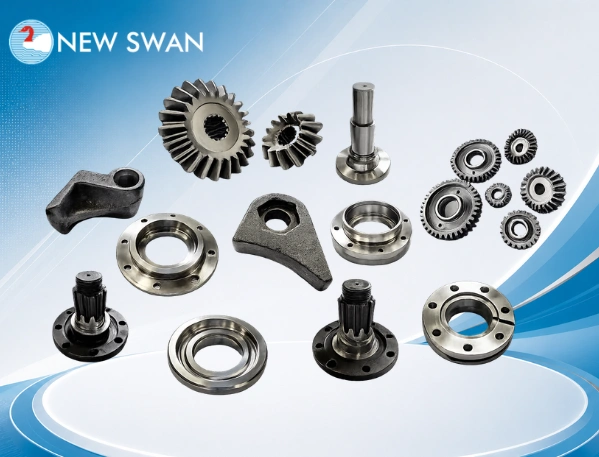

The automotive supply chain is typically divided into different tiers based on the supplier's relationship with Original Equipment Manufacturers (OEMs). OEMs are companies that design and manufacture vehicles, such as passenger cars, commercial vehicles, trucks, and buses.
The supply chain generally consists of:
OEMs are the final vehicle manufacturers that assemble and market automobiles under their brand names.
These suppliers work directly with OEMs and provide complete systems, assemblies, or major components.
Tier 2 companies supply parts, materials, and sub-components to Tier 1 suppliers rather than directly to OEMs.
These suppliers provide raw materials and basic manufacturing inputs such as steel, aluminum, rubber, plastics, and other essential resources.
Each tier depends on the others, creating a highly coordinated production network that ensures vehicles are manufactured efficiently and cost-effectively.
A Tier 1 Automotive Supplier works directly with vehicle manufacturers to deliver critical systems and components that are ready for installation during vehicle assembly.
Rather than supplying individual raw materials, these companies typically provide complete modules or integrated solutions. Examples include:
Tier 1 suppliers are responsible for maintaining strict quality standards, ensuring timely deliveries, and meeting OEM-specific requirements. Since they work directly with vehicle manufacturers, their products must comply with rigorous testing and certification standards.
Modern vehicles require advanced engineering solutions. Tier 1 suppliers often collaborate with OEMs during the vehicle design phase to develop innovative products that improve performance, safety, and efficiency.
Their engineering teams work on:
Quality is a critical factor in the automotive industry. Even a minor defect can lead to recalls, safety concerns, and financial losses.
Tier 1 suppliers implement strict quality control processes that include:
Managing a large supply network is another important responsibility. Tier 1 suppliers coordinate with multiple Tier 2 and Tier 3 suppliers to ensure uninterrupted production.
Effective supply chain management helps:
The automotive sector is evolving rapidly with trends such as electric vehicles, autonomous driving, and connected mobility.
Tier 1 suppliers invest heavily in research and development to introduce new technologies that help OEMs remain competitive in the global market.
Tier 1 suppliers maintain close relationships with vehicle manufacturers. This enables better communication, faster product development, and improved production planning.
Because they serve OEMs directly, these suppliers must comply with international quality standards and industry certifications.
Most Tier 1 suppliers operate modern manufacturing facilities equipped with advanced technologies such as automation, robotics, precision machining, and digital quality control systems.
Vehicle manufacturers depend on consistent product quality and timely delivery schedules. Tier 1 suppliers are designed to meet these expectations through robust operational systems.
Many people confuse Tier 1 and Tier 2 suppliers, but their roles are quite different.
| Tier 1 Suppliers | Tier 2 Suppliers |
|---|---|
| Supply directly to OEMs | Supply to Tier 1 suppliers |
| Deliver complete systems or modules | Provide parts and sub-components |
| Participate in product development | Focus mainly on component manufacturing |
| Manage larger supply networks | Support Tier 1 production requirements |
| Maintain direct OEM relationships | Limited interaction with OEMs |
Both tiers are essential, but Tier 1 suppliers have greater responsibility for system integration and final product performance.
To succeed in the automotive industry, suppliers must demonstrate several important qualities:
Advanced manufacturing capabilities help suppliers produce high-quality components efficiently and consistently.
Automotive products require precision engineering and compliance with strict specifications.
Suppliers must be capable of increasing production volumes to meet changing market demand.
Balancing quality and cost is essential for maintaining long-term partnerships with OEMs.
Successful suppliers continuously invest in technology, employee training, and process optimization.
Companies such as Swan India contribute significantly to the automotive manufacturing ecosystem by delivering precision-engineered components and solutions that support industry requirements.
With a focus on quality, innovation, and manufacturing excellence, Swan India serves various automotive needs through advanced production capabilities and adherence to international standards. Such organizations help strengthen the automotive supply chain by ensuring reliable product quality and operational efficiency.
The automotive industry is entering a new era driven by electrification, sustainability, and digital transformation.
Future opportunities for suppliers include:
As vehicle technology becomes more sophisticated, suppliers will play an even larger role in innovation and product development.
A tier 1 automotive supplier is a crucial link between component manufacturers and vehicle OEMs. By providing complete systems, maintaining high-quality standards, and supporting innovation, these suppliers help ensure the efficient production of modern vehicles.
Their ability to manage complex supply chains, deliver advanced engineering solutions, and meet strict industry requirements makes them indispensable to automotive manufacturing. As the industry continues to evolve, the importance of the tier 1 automotive supplier will only grow, helping shape the future of mobility through innovation, reliability, and excellence.