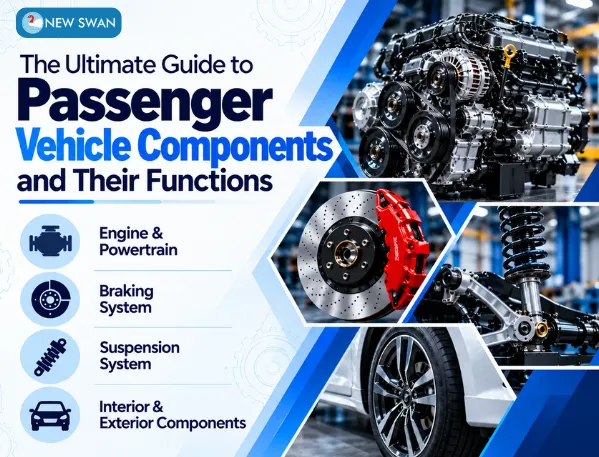

The engine creates the power that moves your car. In an internal combustion engine, pistons move up and down inside cylinders, burning a mix of fuel and air to generate force. Key engine parts include the cylinder head, crankshaft, camshaft, valves, spark plugs and fuel injectors. This power then travels through the powertrain, which includes the transmission, driveshaft, differential and axles. The transmission selects the right gear for your speed, while the drivetrain delivers power to the wheels. A healthy powertrain means smooth acceleration, good fuel economy and reliable performance.
The chassis is the structural skeleton of your vehicle. It holds the engine, body and passengers together while absorbing the forces of driving. Attached to the chassis is the suspension system, which connects the wheels to the body. Springs absorb bumps, shock absorbers control bouncing and stabilizer bars reduce body roll in corners. Control arms and bushings keep the wheels properly aligned. A good suspension keeps tires in contact with the road, which improves handling, braking and ride comfort. Worn suspension parts often show up as uneven tire wear, pulling to one side or a floaty feeling over bumps.
Your brakes are the most important safety feature in your car. Most modern vehicles use disc brakes on the front wheels and either disc or drum brakes at the rear. When you press the pedal, hydraulic fluid pushes brake pads against spinning rotors, creating friction that slows the wheels. Drum brakes work similarly, but with shoes pressing outward against a drum. The anti-lock braking system adds another layer of safety by preventing wheel lockup during hard stops, which lets you keep steering control. Squealing, grinding or a soft brake pedal are clear signs that your brakes need attention right away.
Today's cars rely heavily on electronics. The battery stores energy to start the engine, and the alternator recharges it while you drive. A network of wiring carries power and signals throughout the vehicle. Sensors monitor everything from oxygen levels in the exhaust to wheel speed and engine temperature. All of this information flows to the electronic control unit, the onboard computer that adjusts fuel delivery, ignition timing and many other functions in real time. When a warning light appears on your dashboard, it usually means one of these sensors has detected something unusual.
The cabin is where you spend your time, so comfort matters. Seats provide support and safety through headrests, seat belts and airbags. The dashboard houses gauges, controls and the infotainment system, which handles navigation, music and phone connectivity. Climate control keeps the cabin comfortable using the air conditioning compressor, heater core and blower fan. Upholstery materials such as fabric, vinyl and leather affect both appearance and durability. Quality interior parts not only improve your daily drive but also help maintain your car's resale value over the years.
The outside of your car does more than look good. Body panels shape airflow and protect the structure, while bumpers absorb impact during low speed collisions. Mirrors give you visibility, and headlights, taillights and indicators keep you seen and help you see. The windshield is made of laminated safety glass that resists shattering and supports the roof in a rollover. Paint and protective coatings shield the metal from rust, sunlight and road debris. Regular washing and waxing keep these surfaces strong and attractive.
No single part works alone. When you accelerate, the engine, transmission, fuel system and sensors all coordinate within milliseconds. When you brake, the ABS sensors, hydraulic lines, pads and suspension work together to bring you to a stable stop. Even something as simple as turning the steering wheel involves the steering rack, suspension geometry, tires and power assist systems. Automotive engineers design these systems to be tightly integrated, which means a problem in one area can affect another. A failing alternator, for example, can cause electrical glitches and even stalling. Understanding this connection helps you see why timely maintenance matters.
Every part wears down over time, and regular service is the best way to prevent costly breakdowns. Follow your owner's manual for oil changes, filter replacements, brake inspections and tire rotations. Pay attention to unusual sounds, vibrations, smells and dashboard lights, since these are early warnings. Modern diagnostic tools can read fault codes from your car's computer and pinpoint problems quickly. When replacing parts, choose reliable and compatible options that meet your vehicle's specifications. Swan India is committed to helping drivers find quality parts and useful guidance so that every repair is done right the first time.
Understanding Passenger Vehicle Components gives you real power as a car owner. You can catch small issues before they become expensive repairs, communicate clearly with service professionals and make informed decisions about replacements and upgrades. Regular care extends the life of your vehicle, protects your investment and keeps you and your passengers safer on every journey. Start by learning the basics of each system, keep up with scheduled maintenance and never ignore warning signs. A little knowledge and consistent attention go a long way toward a smoother and safer driving experience.