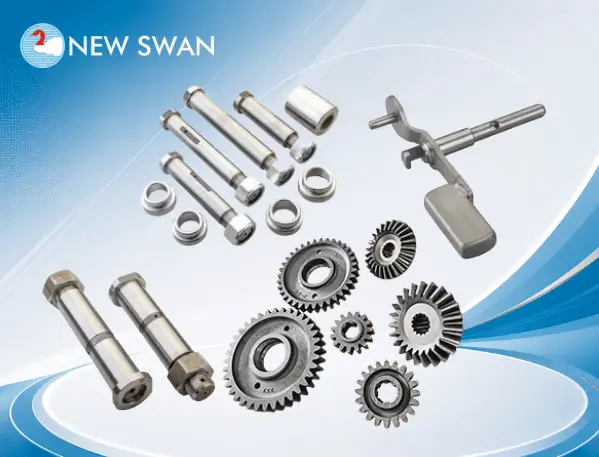

Precision Engineering involves the design and production of mechanical parts or elements with extreme dimensional accuracy. While it falls under the scope of manufacturing, Precision Engineering is very specific in creating components that will work together according to exact requirements with the minimum amount of variability.
These components find their way into all sorts of industries where a minute error in manufacture may impact function or safety. Precision parts are critical for functioning vehicles, aircrafts, medical devices, robotics, industrial equipment and machinery and electronics.
The top precision engineering company would be made of excellent engineers, high quality equipment and thorough quality controls, ensuring the component met the client's standards.
India has fast developed as one of the leading precision manufacturing destinations. Global firms prefer to work with a precision engineering company due to its skill level, up-to-the-minute facilities, and competitive prices for manufacturing.
Several factors have contributed to this growth:
Indian manufacturers now serve clients across Europe, North America, the Middle East, and Asia by delivering reliable engineering solutions without compromising quality.
Different industries require different manufacturing processes. Understanding the types of precision engineering can help businesses select a supplier with the right technical capabilities.
Perhaps the most widely used manufacturing process today, CNC machining enables the production of complex components with exceptional accuracy. Computer-controlled machines ensure consistency throughout the production process while minimizing human error.
Precision milling is ideal for manufacturing intricate parts with detailed geometries. It is commonly used for industrial equipment, molds, tooling, and custom machine components.
Turning produces cylindrical components such as shafts, pins, and bushings with high dimensional accuracy and excellent surface finish.
Grinding is used to achieve extremely fine tolerances and improve surface quality after machining operations.
Each manufacturing method plays an important role in delivering reliable and durable engineered products.
The term precision engineering works refers to the complete range of manufacturing activities involved in producing highly accurate components. These activities may include:
Rather than focusing on a single machining process, manufacturers provide integrated solutions that support every stage of production.
When evaluating a manufacturing partner, it's important to assess the range of precision engineering services they offer. A company with diverse capabilities can simplify your supply chain while maintaining consistent quality.
Common services include:
Working with a supplier that offers comprehensive manufacturing support often leads to improved efficiency and reduced production time.
Modern precision engineering technology has transformed manufacturing by improving productivity, repeatability, and quality control. Today's manufacturers rely on technologies such as:
These technologies help reduce manufacturing errors while ensuring every component meets strict customer specifications.
Selecting the right supplier requires careful evaluation. Before making your decision, consider the following factors.
A manufacturer with experience in your industry is more likely to understand technical requirements, compliance standards, and production challenges.
Review the company's machinery, production capacity, and ability to manufacture both prototypes and large production volumes.
Look for internationally recognized certifications such as ISO 9001 or industry-specific quality systems that demonstrate a commitment to consistent manufacturing practices.
Experienced engineers can recommend better materials, optimize product designs, and improve manufacturing efficiency.
Reliable delivery schedules are essential for maintaining uninterrupted production and meeting customer expectations.
High-quality precision manufacturing offers advantages that extend far beyond dimensional accuracy. Businesses benefit from:
For industries where safety and performance are critical, investing in quality manufacturing is a strategic business decision rather than simply a production expense.
Every manufacturing project has unique requirements. The best precision engineering solutions depend on several factors, including material selection, tolerance requirements, production volume, and application.
A capable engineering partner will evaluate your specifications before recommending the most efficient manufacturing process. This collaborative approach helps optimize production while maintaining both quality and cost-effectiveness.
The two main attributes clients look for when finding a competent and skilled manufacturing partner are technological expertise and capabilities, infrastructure, and quality. SWAN INDIA has managed to attain excellence through producing top quality engineered components with a level of quality that satisfies rigid industry requirements. The firm provides its clients in varied industries, trustworthy, reliable, and creative manufacturing solutions through constant development, innovation and precision.
Using the best equipment and people, SWAN INDIA assists companies in improving product consistency, performance and efficiency. And, over the years, they've also aided clients in long-term success in the manufacturing sector.
When you select a Precision Engineering Firm, it is an investment in both the quality of your product and the success of your business. Don't consider only the price but take a good look at the manufacturer's expertise, quality system, experience within your industry and overall commitment to growth and improvement.
This trend toward technological innovation and increased standards in the Precision Engineering Industry puts an even greater premium on working with a trusted and experienced partner, one that invests in cutting edge manufacturing equipment and facilities and employs highly qualified engineers, who can rely on a robust quality assurance program to ensure reliable results.
Take the time today to weigh these factors to have a lifelong relationship that can help you drive innovation, improve your process efficiency, and enhance your competitive advantage in today's increasingly demanding global market place.