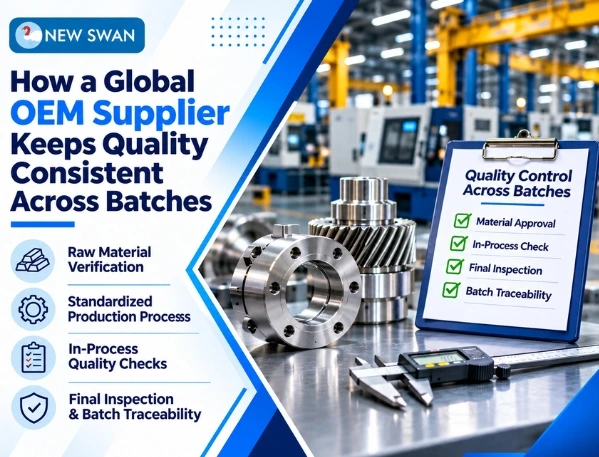

An OEM assembly line runs on the assumption that every part behaves like the last one. If a component drifts even a little, you feel it fast. Fitters start forcing parts in, rework piles up, and the line slows down. Sometimes a defective part slips through and ends up with the end customer, which is the worst outcome of all.
One great batch doesn't prove much. What buyers want from a Global OEM Supplier is proof that the result repeats, whatever the order size and whatever the season.
People assume quality begins at the machine, but it starts earlier than that. Steel from one lot can be a bit harder than steel from another. A rubber compound can cure differently depending on the batch. Those small differences carry straight through into the finished part.
Good manufacturers buy from approved sources and check each incoming lot against the specification. They read the material certificates, and they often run their own tests on a sample too. If a lot fails, it gets sent back before it ever touches a machine.
Skilled operators are a real asset. Still, a factory that depends on one particular person getting it right is a factory that will eventually get it wrong, say when that person is on leave.
The fix is boring but effective: write the process down and follow it. Machine settings, tooling, cutting speeds and work instructions are all documented, so the part comes out the same on the night shift as it does in the morning. Tool wear deserves a special mention. A cutting tool dulls slowly, and the dimensions creep along with it, so nobody notices until parts are suddenly out of tolerance. Careful shops swap tools on a schedule instead of waiting for trouble.
Finding a problem after 5,000 parts is painful. Finding it after five is a minor annoyance. That's the whole reason good quality systems inspect along the way instead of only at the finish line.
In practice that usually looks like this:
None of this is fancy. It just stops a small deviation from becoming a rejected batch.
Even with solid checks during the run, finished parts still get inspected against the drawing. That means dimensions, surface finish and appearance, plus any functional test the part needs.
Traceability matters just as much, and people tend to overlook it. Each batch should carry markings that link it back to the material lot, the machine and the production date. If a complaint ever comes in, the supplier can pin down which parts are affected and dig into the cause, rather than guessing and hoping.
You don't achieve consistency once and tick it off. Measuring instruments need regular calibration, because a gauge that's slightly off will happily pass parts that should have failed. Machines need planned maintenance or they lose accuracy bit by bit. And operators need refresher training so the standards stay clear for everyone on the floor, including new joiners.
Then there's customer feedback. When a buyer reports an issue, a serious supplier looks for the root cause, changes the process, and records that change so the same problem doesn't come back in a later batch.
Manufacturers working across forged, machined, sheet metal and rubber parts, Swan India among them, rely on this kind of daily discipline, since each material and process behaves differently and needs its own controls.
If you're evaluating a potential partner, a handful of direct questions will tell you a lot:
Clear, confident answers usually mean a mature quality system. If the answers get vague, take note.
Consistent quality rarely comes from one big investment. It's built from small habits repeated every day: material checks, fixed processes, inspection at each stage, and an honest follow up when something goes wrong. That's what separates a dependable Global OEM Supplier from one that only delivers a nice sample.
So if you're a buyer, look past the first sample and ask how the thousandth batch will turn out. Companies like Swan India build their name on that answer, because in OEM supply, trust gets earned one batch at a time.