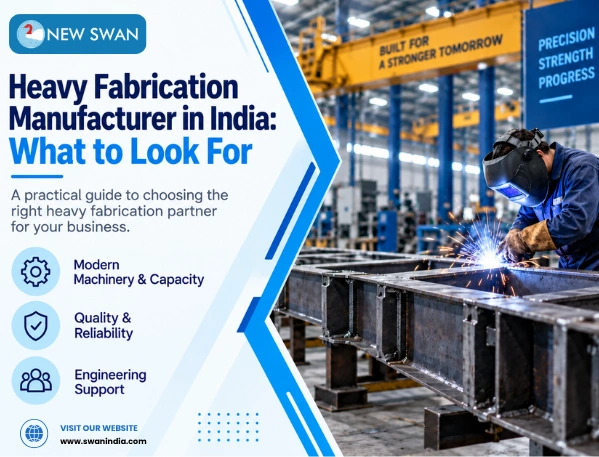

Heavy Fabrication means turning thick steel plates, sections and tubes into large, load-bearing parts. The work includes cutting, bending, forming, welding, machining and finishing. Typical products are truck chassis parts, trailer frames, construction equipment structures, agricultural machinery frames and industrial supports.
Unlike light sheet metal work, heavy fabrication deals with thicker material, higher loads and tougher welding needs. That means the supplier needs stronger machines, trained welders and tighter process control. Keep this difference in mind when you compare companies, because a shop that does great thin sheet work may not be ready for heavy structural jobs.
Start with the shop floor. Ask which cutting methods the supplier uses, such as laser, plasma or gas cutting, and what plate thickness each one can handle. Ask about press brake and press capacity, welding equipment, and whether they have in-house machining for finishing critical surfaces.
Capacity matters as much as capability. A supplier may have the right machines but too little room in the schedule. Ask how many parts they can produce per month and how they handle sudden increases in demand. A good partner will answer with clear numbers rather than vague reassurance.
Here are a few questions worth asking during a plant visit:
Quality is where good suppliers separate themselves. Look for ISO certification, but do not stop there. A certificate shows a system exists. You also want to see how it works in daily practice.
Ask about weld inspection, dimensional checks and material test reports. For critical parts, non-destructive testing may be needed to catch hidden defects. Ask how they record inspection results and whether they can share reports with each batch. A supplier who tracks quality data openly is usually one who takes it seriously.
The best fabricators do more than follow drawings. They review your design and point out where a small change could cut cost or improve strength. This is often called design for manufacturability, and it can save a lot of money over a long production run.
Tooling matters too. Jigs and fixtures keep parts consistent from batch to batch, especially in welded assemblies. Ask whether the supplier builds tooling in-house, because that shortens lead time and gives more control over accuracy.
Experience with similar parts is worth more than a long list of general capabilities. A company that already makes components for trucks, trailers or construction machines will understand the loads, tolerances and finishing standards your parts need.
This is one area where Swan India has built its background, supplying components for commercial vehicles, trailers and construction equipment to OEM customers. When you review any supplier, ask for examples of similar work and, if possible, speak to existing customers about delivery and consistency.
Even excellent parts cause trouble if they arrive late. Ask about typical lead times, how the supplier plans production and how they report progress. Regular updates and a single point of contact make a big difference when schedules are tight.
If you export, check whether your chosen Heavy Fabrication manufacturer in India understands international packaging, documentation and quality expectations. Suppliers already shipping to global buyers usually have stronger systems, because overseas customers expect consistency and proper paperwork every time.
Price is important, but the lowest quote often hides costs. A cheaper part that needs rework or fails in the field costs far more than the small saving at purchase. Ask for a clear quote that separates material, processing, tooling and finishing so you can compare suppliers fairly. Then weigh price against quality, delivery record and support.
Ask for certificates, sample inspection reports and a plant visit. Seeing the process yourself tells you more than any brochure.
Not always. What matters is whether the supplier has the right equipment, experience and capacity for your parts and volumes.
It depends on part complexity and tooling needs. New parts often need extra time for prototypes and approval, while repeat orders move much faster.
Finding the right Heavy Fabrication manufacturer in India comes down to a few clear checks. Look at machines and capacity, quality systems, engineering support, industry experience, delivery habits and honest pricing. Visit the plant if you can, and ask for proof instead of promises.
If you are planning a project and want a partner with experience in vehicle and equipment components, get in touch with Swan India to discuss your drawings and requirements. A short conversation early on can save weeks later.