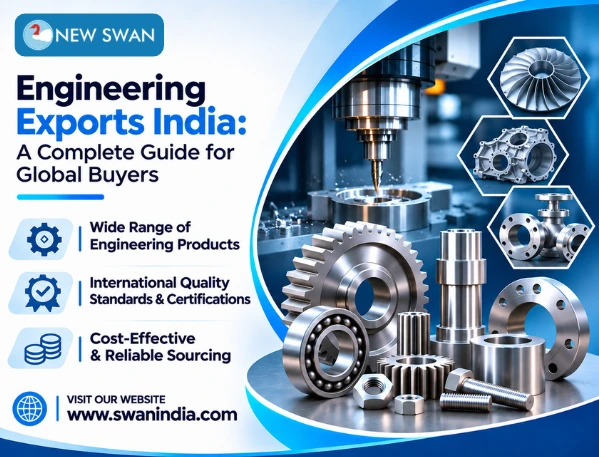

The range of products under Engineering Exports India is wide. Some of the most common categories are listed below.
Each category serves different industries, so buyers can often find several parts of their supply chain under one country. That makes coordination easier and shipping more efficient.
Quality is often the first concern for any overseas buyer. The good news is that many Indian manufacturers follow international standards. Look for certifications such as ISO 9001 for quality management, IATF 16949 for automotive parts and ISO 14001 for environmental practices. Some products may also need CE marking, API approval or ASME compliance depending on the market.
Beyond certificates, ask about the testing process. A good supplier will offer material test reports, dimensional inspection reports and third party inspection when needed. Do not hesitate to ask for sample parts before placing a large order. A reliable exporter will welcome the request because it builds trust on both sides.
Price matters, but lead time and logistics matter just as much. Most Indian exporters ship from major ports such as Mumbai, Chennai, Kolkata and Mundra. Sea freight is the most common route for bulk orders, while air freight is used for urgent or high value shipments.
Typical production lead times range from four to twelve weeks depending on the complexity of the part and the size of the order. Tooling and custom development can add extra time at the start. To avoid surprises, agree on a clear production schedule and ask for regular updates during manufacturing.
The Indian government actively supports the sector. Schemes such as RoDTEP, the Production Linked Incentive programme and various duty drawback options help manufacturers stay competitive in global markets. Organisations like EEPC India also guide exporters, organise trade fairs and connect them with international buyers.
For a buyer, this support means a more stable and growing supplier base. Exporters who benefit from these schemes can invest more in technology, training and capacity, and that usually leads to better service for you.
Picking the right partner is the most important step. A few simple checks can save you time and money.
First, review the company profile. Look at how long they have been in business, which industries they serve and which countries they already export to. Second, check their plant facilities and machinery list. Third, ask for customer references and past project examples. Fourth, understand their communication style. A responsive team that answers questions clearly is usually a good sign.
It also helps to visit the factory if possible, either in person or through a virtual tour. Seeing the shop floor gives a better idea of cleanliness, process control and worker discipline than any brochure can.
If you are new to this, the process is easier than it looks.
Following these steps in order keeps risk low and builds a strong working relationship over time.
No sourcing journey is perfect. Buyers sometimes face communication gaps, time zone differences or delays during festival seasons in India. The best way to manage these is to set clear expectations early and keep written records of every agreement. Use a single point of contact on both sides, and plan orders a little ahead of your actual need.
Currency changes can also affect pricing. Discuss payment terms openly and consider fixing the rate for the order period if the amount is large.
Swan India is one such manufacturing and export partner that focuses on quality, clear communication and on time delivery. Buyers who work with this team benefit from people who understand international requirements and treat every order with care. Whether you need standard parts or custom engineered products, a supplier that listens to your needs makes the whole process smoother.
India offers a strong mix of skill, cost advantage, quality focus and government backing. With the right research and a reliable partner, buyers can build a long term supply chain that supports growth. If you are planning to explore Engineering Exports India, start small, test the quality, and expand as trust grows. Companies like Swan India are ready to support that journey with honest service and consistent results.