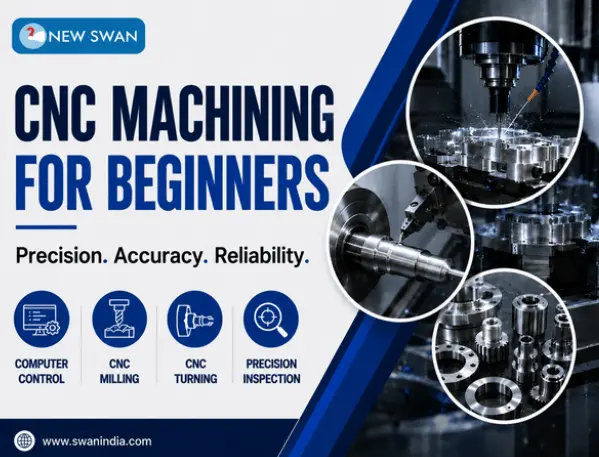

CNC stands for Computer Numerical Control. Basically, a computer tells the machine exactly where to move and how much material to remove. No operator standing there manually turning dials for hours.
That said, a person is still very much involved. Someone designs the part, someone programs the machine, someone sets it up and checks the output. The computer just handles the repetitive, high-precision movement part, which is where humans tend to struggle anyway. Fatigue sets in, hands shake a little, attention drifts. Machines don't have that problem.
The basic flow looks something like this:
It sounds simple written out like this, but each step has its own learning curve. A poorly written program can ruin an expensive block of aluminum in seconds. Setup mistakes are just as costly. This is why experienced operators are worth their weight, honestly.
A few reasons keep this process relevant even with newer manufacturing methods around.
Accuracy tops the list. Tolerances as tight as a fraction of a millimeter aren't unusual, and that kind of consistency matters when you're producing hundreds or thousands of identical parts. Nobody wants part 400 to fit slightly differently than part 1.
There's also the speed factor. Once a program is dialed in, the machine just keeps running without needing to be re-explained or adjusted for every new piece.
Material flexibility helps too. Aluminum, steel, titanium, various plastics and composites, CNC machines work with pretty much all of it. That's a big reason industries like automotive, aerospace, and healthcare lean on this process so heavily.
At Swan India, this kind of reliability is something we try to build into every project we take on. And honestly, once clients understand how the process works, conversations around tolerances and timelines tend to go a lot smoother too.
There isn't just one type. CNC milling uses rotating tools to cut into a stationary piece of material, good for detailed shapes and pockets. CNC turning flips that around. The material spins while a fixed tool shapes it, which works well for round parts like shafts.
Drilling, grinding, and routing round out the list, each suited to a specific kind of job. Most real world parts end up using a mix of these methods rather than just one.
People ask this a lot, and the honest answer is — it depends on how deep you want to go. Basic machine operation and safety can be picked up in a few months with proper training. Programming and running multi-axis machines takes years of hands-on practice.
The demand for people who know this stuff isn't slowing down either. As factories automate more processes, someone still needs to understand what's actually happening inside that machine.
These two get mixed up constantly, probably because both start from a digital file. But the similarities pretty much end there.
3D printing builds a part from nothing, adding material layer by layer until the shape is complete. CNC machining works backward — you start with a solid block and cut away everything that isn't the part.
3D printing tends to win for prototypes and oddly shaped internal geometry. Machining usually wins when strength and material properties actually matter, like parts that need to hold weight or survive stress.
If your business needs parts made, even a rough understanding of this process changes how you talk to your manufacturer. Questions about tolerances, material choice, and lead times all get easier once you know the basics.
That's part of why Swan India spends so much time refining setup and quality checks on every job, whether it's one prototype or a full production run. The process only works if the details are right, and there isn't much room for guessing.
CNC machining isn't complicated once you break it down. A computer guides a machine to remove material with precision most humans simply can't match by hand. That's it, really. But that one idea has quietly reshaped how everything from car engines to surgical tools gets made.
Whether you're thinking about a career in this field or just trying to figure out who to trust with your next manufacturing project, understanding the basics is a solid place to start.