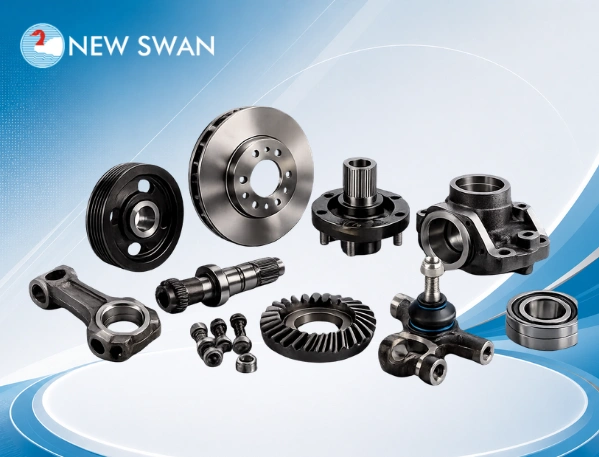

Global industry standards are guidelines and requirements that help ensure automotive parts are manufactured consistently and safely. These standards are recognized worldwide and help manufacturers deliver products that meet the expectations of vehicle manufacturers, distributors, and end users.
When a company follows international standards, customers can trust that the parts have been designed, tested, and manufactured according to strict quality requirements.
Imagine a vehicle component failing while the vehicle is on the road. Even a small defect can affect performance, safety, and reliability. This is why quality control is one of the most important aspects of automotive manufacturing.
Manufacturers focus on quality because it helps them:
By maintaining high standards, manufacturers can provide products that perform consistently under different operating conditions.
A high-quality automotive component begins with high-quality materials. Before production starts, manufacturers carefully inspect and evaluate the raw materials they receive from suppliers.
Materials are tested for factors such as:
Using reliable materials helps ensure that the finished product can withstand everyday wear and challenging operating environments.
Modern automotive manufacturing is very different from traditional production methods. Today's facilities use advanced technologies to improve precision and consistency.
Many manufacturers invest in:
These technologies help reduce errors and ensure every component is manufactured according to exact specifications. To stay competitive in global markets, auto parts manufacturers continue to adopt new technologies that improve efficiency and product quality.
Producing quality components consistently requires a structured approach. That's where quality management systems come into play.
Many automotive companies follow internationally recognized certifications such as ISO 9001 and IATF 16949. These systems provide clear guidelines for managing production processes and maintaining quality standards.
A strong quality management system helps manufacturers:
These systems also encourage continuous improvement, helping companies stay aligned with changing industry requirements.
One of the biggest reasons automotive components meet global standards is extensive testing. Manufacturers don't simply produce parts and ship them to customers. Instead, products go through multiple inspections and evaluations before approval.
Some common testing methods include:
Every component must meet exact measurements and tolerances. Precision measuring equipment helps verify that specifications are met.
Parts are tested to ensure they can handle the loads and pressures they may experience during operation.
Repeated stress is applied to determine how a component performs over time.
Products are exposed to extreme temperatures, moisture, and corrosive conditions to evaluate durability.
Manufacturers test components under real-world conditions to confirm they perform as intended.
This detailed testing process helps prevent failures and ensures product reliability.
In the automotive industry, knowing where a product came from is just as important as knowing how it was made.
Manufacturers maintain detailed records of:
This traceability allows companies to quickly identify and resolve issues if they arise. It also supports compliance with international regulations and customer requirements.
Technology plays a major role in manufacturing, but skilled employees are still critical to maintaining quality standards.
Companies regularly train their workforce on:
Well-trained employees help ensure that every stage of production meets the required standards.
Today's automotive industry is not only focused on quality but also on environmental responsibility. Around the world, manufacturers are adopting more sustainable practices to reduce their environmental impact.
Common initiatives include:
These efforts help manufacturers meet environmental regulations while supporting long-term business growth.
Companies like Swan India understand that maintaining global standards requires continuous investment in technology, quality systems, and skilled professionals. By focusing on precision manufacturing and strict quality control, the company works to meet the evolving needs of the automotive industry.
A commitment to quality, innovation, and customer satisfaction helps manufacturers build strong relationships with OEMs and international clients.
The automotive industry continues to evolve with new technologies, stricter regulations, and higher customer expectations. To remain competitive, auto parts manufacturers must continuously improve their processes, adopt advanced manufacturing techniques, and maintain rigorous quality standards.
Organizations such as Swan India demonstrate how a strong focus on quality, testing, and innovation can help meet global industry requirements. By following international standards and investing in continuous improvement, auto parts manufacturers play a vital role in delivering safe, reliable, and high-performance components to customers around the world.