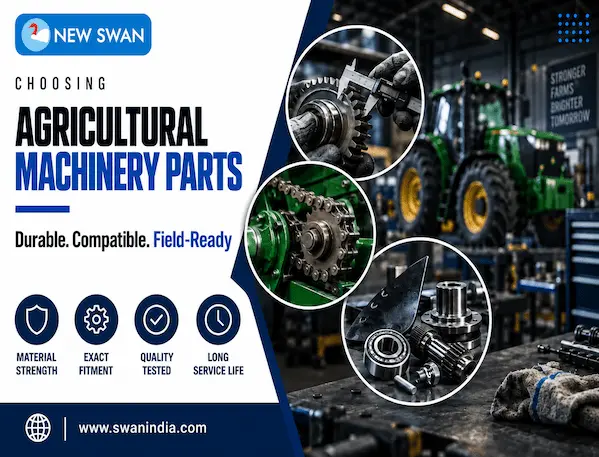

The first step is to understand exactly what your machinery needs. Every tractor, harvester, tiller, and other agricultural equipment comes with its own specific technical requirements. Even components that look similar may have differences in dimensions, materials, fitting, or operating capacity.
Before purchasing a replacement component, check the machine's model number, manufacturer's specifications, part number, and technical requirements. If possible, compare the old component with the new one before making a purchase.
Using the wrong part can affect machine performance and may even cause damage to other components. Taking a few minutes to verify compatibility can prevent unnecessary expenses later.
Material plays a major role in determining how long a component will last. Agricultural machinery often operates in challenging environments where parts are exposed to dust, mud, moisture, vibration, heavy loads, and continuous friction.
For this reason, components made from suitable high-quality materials are generally a better choice for demanding applications. Depending on the type of part, properties such as hardness, tensile strength, corrosion resistance, and wear resistance can make a significant difference.
For example, components that experience constant friction should be capable of handling repeated movement without wearing down quickly. Similarly, parts exposed to moisture or chemicals should have appropriate resistance against corrosion.
A component that works well in one environment may not necessarily be suitable for another. Think about how and where your machinery is used.
Is the equipment operating on dry soil, wet fields, rocky land, or uneven terrain? Does it work for a few hours a week or for long periods every day during the harvesting season? Understanding these conditions will help you select components designed to handle the actual workload.
Heavy-duty agricultural operations require parts that can tolerate repeated stress. Choosing components based only on their appearance or low price can result in faster wear and frequent replacement.
Quality manufacturing is just as important as raw material quality. A component made with inconsistent dimensions or poor finishing may not fit correctly, even if it is manufactured from good material.
Choose suppliers that maintain reliable manufacturing and quality-control standards. Precise machining, accurate measurements, smooth finishing, and careful inspections can all help ensure better performance and dependable results.
When buying replacement components, ask about quality checks and manufacturing standards if the information is available. A reliable supplier should be able to provide clear product specifications instead of making vague claims about quality.
Price is naturally an important consideration, especially when maintaining several machines. However, choosing the cheapest available component is not always the most economical decision.
A low-cost part that wears out quickly may need to be replaced several times. It can also increase downtime and, in some situations, cause additional damage to connected components.
Instead of looking only at the initial purchase price, consider the overall value. A slightly more expensive component with better durability and performance may provide greater savings over its working life.
The goal should be to find a balance between quality, durability, compatibility, and cost.
The supplier you purchase from can have a major impact on the quality of your machinery maintenance. A dependable supplier should offer accurate product information, consistent quality, and suitable options for different agricultural applications.
Before placing an order, research the supplier's experience, product range, customer reviews, and after-sales service. It is also important to check their return and replacement policies so you know what to expect if any issue arises.
For businesses and farmers who regularly purchase components, building a relationship with a trusted supplier can make future maintenance much easier. Swan India, for example, focuses on providing components suited to agricultural and industrial requirements.
Even when purchasing from a trusted source, it is good practice to inspect components before installing them. Look for visible cracks, unusual marks, corrosion, damaged threads, incorrect dimensions, or other signs of damage.
Compare the new component with the old one and check all the important measurements carefully. If anything seems incorrect, contact the supplier before installing it instead of forcing the component into place.
Proper installation is equally important. A high-quality component can still fail prematurely if it is incorrectly fitted, improperly tightened, or used without the required lubrication.
Durability does not depend only on the component itself. Regular maintenance can significantly extend the working life of agricultural equipment.
Follow the machinery manufacturer's recommended maintenance schedule. Check components regularly for excessive wear, loose fittings, unusual noises, overheating, or vibration. Replace worn components before they cause more serious problems.
Keeping machines clean can also help. Soil, dust, plant residue, and moisture can accumulate around moving components and contribute to premature wear.
If you operate multiple machines, consistency becomes especially important. A reliable supplier should provide components with consistent dimensions and dependable performance across different batches.
Consistent quality makes maintenance more predictable and reduces the chances of compatibility problems. It can also simplify inventory management when frequently used components are purchased in larger quantities.
For agricultural businesses, investing in dependable components can support smoother operations, particularly during busy planting and harvesting periods when unexpected machinery downtime can be costly.
When selecting Agricultural Machinery Parts, it is important to look beyond the immediate replacement. Think about how well the part is likely to perform over its expected lifespan and whether it supports your overall maintenance needs.
A durable component should withstand the working conditions it was designed for, fit properly, and maintain reliable performance with appropriate care. Selecting products based on these factors rather than appearance or price alone can help improve equipment reliability.
Swan India recognizes the important role that agricultural machinery plays in supporting farmers with their daily farming operations. Selecting suitable components can help equipment owners maintain their machines and keep essential agricultural work moving efficiently.
Agricultural machinery is a substantial investment. While none of the spare parts are thought to work on their own, they collectively contribute to the entire machine's operational state. Selecting spares depends on durability and not the fit. You would need to consider the material standard, compatibility, manufacturing standards, operating environment, supplier reliability, and maintenance needed to finally pick a part.
However, by carefully considering the type of component when purchasing it, farmers and agri businesses can lessen the number of unexpected breakdowns and machinery downtime in the future and ultimately save money on maintenance bills in the long term.
The best choice is not always the cheapest option. Instead, look for a component that offers the right combination of quality, durability, compatibility, and value. With careful selection and regular maintenance, agricultural machinery can continue working efficiently through demanding seasons and challenging field conditions.